
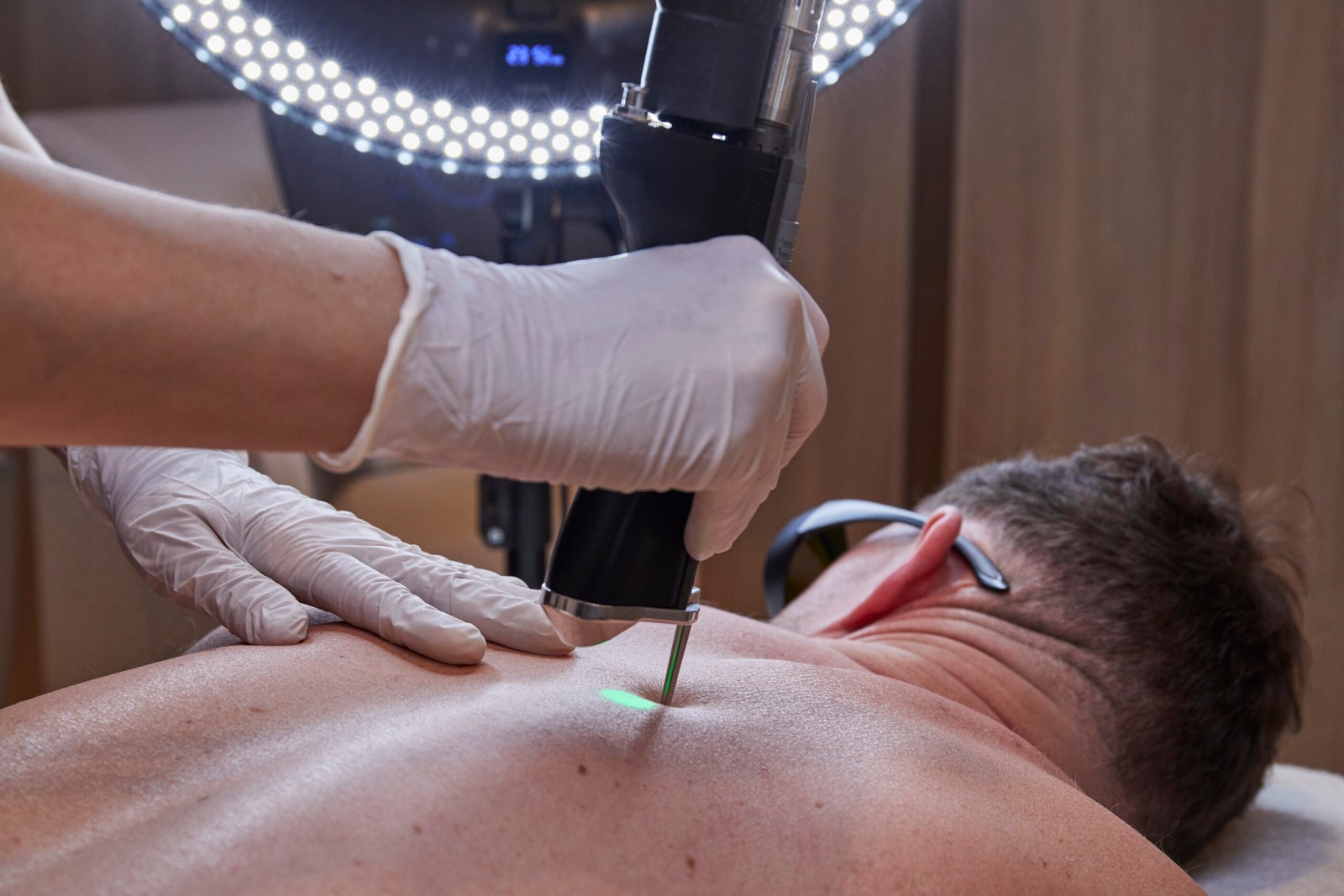
Quick answer: For most people, the best time of year for laser hair removal is autumn or early winter. There’s less sun, so your skin is less likely to be tanned. A full course also has time to fit into the darker months before the next summer. You can have laser at other times of year too, but sun, tans and holidays are more likely to delay your sessions.
If you’re wondering about the best time of year for laser hair removal, the calendar matters more than most people expect. Laser works best on skin that isn’t tanned, and a full course takes months, not weeks. Starting in autumn or winter lets most of your treatment happen in the darker months. If you’re looking at laser hair removal treatment in Manchester, this guide explains why timing matters, what a course looks like across the year and when it’s better to wait.
Why is autumn the best time of year for laser hair removal?
Laser hair removal targets melanin, the pigment that gives hair its colour. The pigment in the hair absorbs the laser light and turns it into heat. The heat weakens the follicle and slows future growth.
Your skin contains melanin too. When skin is tanned it holds more pigment, so it competes with the hair for the laser’s energy. That raises the chance of side effects such as blistering or patches of lighter or darker skin. Your practitioner may need to lower the settings or postpone your session.
In the UK, the sun is much weaker through autumn and winter. Most of us spend more time indoors, and the areas people usually treat stay covered: legs, underarms, back and bikini line. That makes it far easier to keep your skin untanned from one session to the next, and laser needs exactly that.
How does a tan affect laser hair removal?
Any kind of tan can hold up your treatment:
- A natural tan: your session is usually postponed until the tan has faded.
- Sunburn: the skin needs to heal fully and settle before it’s treated.
- Fake tan or spray tan: remove it completely before a session, and don’t reapply it for a few days afterwards.
- Sunbeds: avoid them on the areas being treated for the whole of your course.
Before your consultation and patch test, keep the areas out of the sun and off sunbeds, and free of fake tan, for at least two weeks. In summer that can be hard to manage. In November it usually takes no effort at all.
How a laser hair removal course fits into the year
Hair grows in cycles, and laser only affects hairs in their active growth phase. Only some of your hairs are in that phase at any one time, which is why you need a course rather than a single session.
Most areas need six to eight sessions, four to six weeks apart. Facial hair and hair driven by hormones often need more. A full course usually takes around six to ten months.
Here’s how a course started in November might look. Your own plan will depend on the area and how your hair responds.
| When | What usually happens |
| November | Consultation and patch test, then your first session once your skin has been checked |
| December to January | Sessions two and three. Treated hair starts to shed and regrowth becomes patchier |
| February to April | Sessions four to six. Clear thinning on most areas |
| May onwards | Final sessions where needed, for the more stubborn follicles |
| After your course | Most people have a top-up once or twice a year |
The sessions that fall in late spring and summer are the last few. By then there’s far less hair, and they’re easier to plan around holidays.
Read more: How to fit SPF into your daily skincare routine
Is winter a good time to start laser hair removal?
Yes. A December or January start still puts your first few sessions in the darkest months. You may not finish every session before summer, but most people will see clear thinning by then. Winter does bring a few things to plan for.
Christmas parties and fake tan
Fake tan is popular in party season. If you have a session coming up, remove all fake tan beforehand and leave a few days before reapplying it. If you know you’ll want a tan for an event, tell your practitioner and they’ll space your sessions around it.
Ski trips and winter sun holidays
Cold weather doesn’t mean low UV. Snow reflects sunlight and the sun is stronger at altitude, so skin can tan or burn on the slopes. A week of winter sun abroad can tan skin as much as a summer holiday at home. Give your holiday dates when you book, so your sessions can be planned around them.
Can you have laser hair removal at other times of year?
Yes. Laser hair removal can be carried out all year round, as long as the treated skin isn’t tanned and you protect it from the sun.
If you start in spring, most of your sessions will fall in the summer months. That works well if the areas stay covered and out of the sun. You’re unlikely to have finished your course before your summer holiday, but your hair will usually be thinner and slower to grow back.
If you start in summer, you’ll need more care. Use SPF 30 or higher on any treated skin that’s exposed, and expect a session to be moved if your skin has caught the sun. For areas that see a lot of sun, many people find it easier to wait until autumn.
Who should wait before starting laser hair removal?
The season isn’t the only thing that decides when to start. It’s usually better to wait if:
- the area is tanned, fake-tanned or has had recent sunbed use
- you’re pregnant: your course can be planned for afterwards
- you take isotretinoin or another medicine that makes skin sensitive to light (tell your practitioner at your consultation)
- you have a sunny holiday planned in the middle of your course
- your hair is blonde, grey, white or red: there isn’t enough pigment for the laser to target
A consultation and patch test is required before any laser treatment. It’s the right place to check whether now is a good time for you.
How to make the most of an autumn or winter start
- Book your consultation and patch test early. Each area is tested before your first full session.
- Shave, don’t wax. Shave the area the day before each session. Don’t wax, pluck, thread or use hair-removal cream for four weeks beforehand, because the laser needs the hair root.
- Keep to your schedule. Gaps of four to six weeks keep your course on track for the spring.
- Wear SPF even in winter. Use SPF 30 or higher on any treated skin that’s exposed, such as the face or neck.
- Share your diary. Tell your practitioner about holidays, events and any new medicines.
Men thinking about treating several areas at once may also find our guide on whether full body laser is worth it for men useful.
Ready to plan your course?
Autumn and winter give laser the best conditions: less sun, skin that isn’t tanned, and enough time for a full course before summer. Every course at Manchester Aesthetics starts with a consultation and patch test with Julie, our skin and laser specialist, on the Cynosure Elite iQ Pro. When you’re ready, book a consultation, or see how a laser course works, area by area.
