You’ve used the same moisturiser for years, and suddenly it isn’t enough. Your skin feels tight by lunchtime, a serum you loved now stings, and there’s a breakout on your chin that belongs to your teenage years. If that sounds familiar, you’re not imagining it.
Menopause skin changes are among the most common things we talk about in clinic, yet many women don’t connect them to their hormones at first. They often arrive during perimenopause, years before periods stop, so they can feel confusing and sudden.
As a nurse-led skin clinic in Manchester, we see the full range: dryness, sensitivity, pigmentation, adult acne, crepey texture and a gradual loss of firmness. In this guide, we’ll explain what’s happening beneath thae surface, what you can do at home, and when a professional menopause skin treatment in Manchester might be worth exploring.
Why does menopause affect your skin?
The short answer is oestrogen. Your skin is full of oestrogen receptors, and this hormone quietly does a great deal of work behind the scenes. It supports collagen production, helps skin hold on to water, encourages healthy oil production and keeps the skin barrier resilient.
During perimenopause, oestrogen levels don’t fall in a neat straight line. They rise and dip unpredictably, often for several years. In the UK the average age of menopause is 51, but perimenopausal symptoms commonly begin in the early to mid-40s, and sometimes earlier. That’s why your skin may behave differently from one month to the next.
Once oestrogen settles at a lower level after menopause, several things happen together:
- Collagen production slows. Collagen loss is fastest in the first few years after menopause, which is why many women notice firmness changing quite quickly.
- Hydration drops. Skin makes less of its natural moisturising factors and hyaluronic acid, so it loses water more easily.
- The barrier weakens. A thinner, less robust barrier lets irritants in and moisture out.
- Your hormones rebalance. As oestrogen drops, testosterone has more of a say, which is why some women get spots, or the odd stray chin hair, they’ve never had before.
- Cell turnover slows. Dead cells linger on the surface, leaving skin looking duller and feeling rougher.
None of this means your skin is “failing”. It’s simply adjusting to a new normal, and with a little extra care it can still look and feel healthy.
The most common menopause skin changes
No two women go through this in quite the same way, but these are the changes our nurses at our Manchester clinic hear about again and again.
Dryness and dehydration
This is usually the first change women notice. Skin can feel tight, look flaky around the nose and cheeks, and drink up moisturiser without staying comfortable. Our Manchester winters, with cold winds outside and central heating indoors, don’t help.
Sensitivity and redness
A weaker barrier means skin reacts more easily. Products you’ve used for years may start to sting, and flushing or hot flushes can leave lingering redness. Some women develop rosacea-type symptoms for the first time in midlife.
Pigmentation and uneven tone
Hormones help control the cells that make pigment, so as they shift, sun spots, age spots and patchy melasma can appear or deepen. It’s also when years of summer holidays and forgotten SPF tend to catch up with us, especially across the cheeks, forehead and backs of the hands.
Hormonal breakouts
Adult acne in your 40s and 50s can feel deeply unfair. As oestrogen falls, androgens have a stronger effect on oil glands, often causing deeper, tender spots along the jawline and chin. Because skin is also drier, harsh teenage-style acne products tend to make things worse.
Fine lines and wrinkles
Collagen and elastin are what keep skin springy, so as levels fall, the lines around your eyes, mouth and forehead can settle in more deeply. Dehydration makes them look more pronounced, which is why fine lines often seem worse on dry days.
Changes in texture
Slower cell turnover leaves skin rougher and less radiant. Some women notice a thinner, crepey quality, particularly on the neck, chest and under the eyes. Pores may also look more visible.
Loss of firmness and volume
Losing collagen, plus natural changes in the fat and bone beneath your skin, can make your face look a little less lifted than it used to. You might notice the jawline looking less defined, cheeks looking flatter or skin looking more tired overall.
It’s common to have several of these at once. That’s why a single product rarely solves everything, and why a personalised plan tends to work best.
How to support menopausal skin at home
You don’t need a ten-step routine. A few small swaps can make your skin noticeably more comfortable, and they’ll help any treatments you have go further. Here’s where we usually suggest starting.
- Cleanse gently. Swap foaming or stripping cleansers for a cream, balm, or milk cleanser that doesn’t leave skin tight.
- Rebuild the barrier. Look for moisturisers containing ceramides, glycerin, hyaluronic acid or squalane. You may need something richer than you used before.
- Wear SPF every day. A broad-spectrum SPF 30 or higher is essential, even on grey Manchester days, because UVA passes through clouds and causes pigmentation and collagen damage.
- Introduce actives slowly. Retinoids, vitamin C and niacinamide can all help menopausal skin, but sensitive skin needs a gradual, guided approach.
- Look after the whole picture. Sleep, hydration, a balanced diet with healthy fats, regular movement and not smoking all support skin health.
If you’re considering or already using HRT, it’s worth discussing with your GP or menopause specialist. Many women find it improves their skin, but it’s a medical decision based on your overall health, not a skincare product.
Menopause skin treatment in Manchester: how professional care can help
Sometimes, even with a great routine, your skin needs a little more help, and that’s completely normal. That’s where in-clinic treatments come in, because they can reach deeper layers than any cream to boost collagen, even out tone and strengthen the barrier.
It starts with a proper skin consultation
At Manchester Aesthetics, every treatment plan begins with a skin consultation with one of our nurses. We’ll look closely at your skin, talk through your symptoms, medical history, medications and any HRT, and understand what matters most to you.
Menopausal skin can be thinner and quicker to react, so we take things carefully, and some treatments aren’t suitable alongside certain medications or skin conditions. As nurses, we’d always rather recommend less and get it right than rush you into something unsuitable.
Treatments that can help menopausal skin
Depending on your concerns, your nurse may recommend one treatment or a combination.
| Concern | Treatments we may suggest | How they help |
|---|---|---|
| Dryness and dull texture | Skin boosters, medical-grade skincare | Deliver deep hydration and support barrier repair |
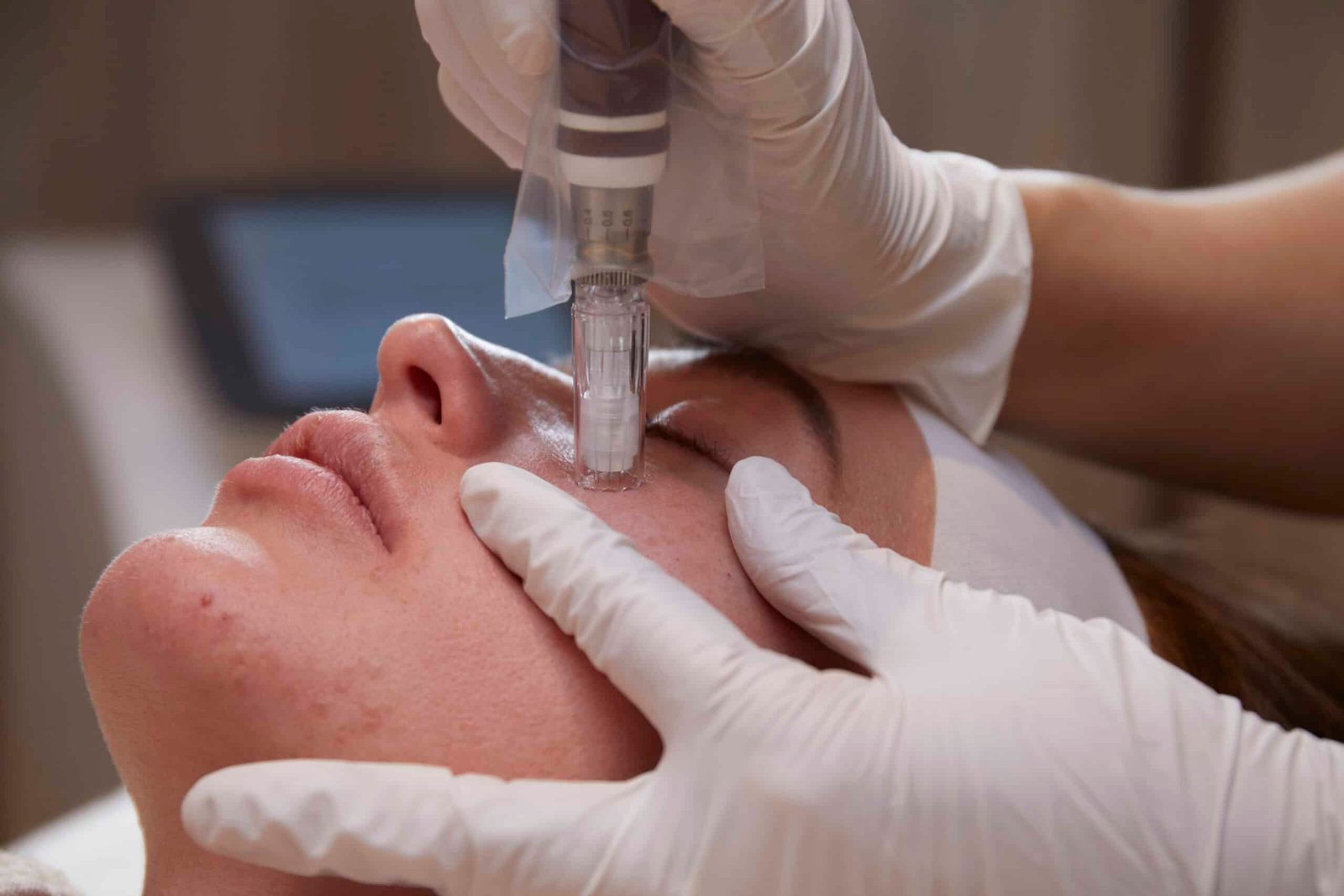
| Fine lines and crepey skin | Microneedling, skin boosters | Stimulate the skin’s own collagen and elastin |
| Pigmentation and sun damage | Chemical peels, laser or IPL | Target excess pigment and encourage brighter, more even tone |
| Redness and visible veins | Laser or IPL | Reduce diffuse redness and small thread veins |
| Hormonal breakouts | Chemical peels, medical-grade skincare | Calm congestion without over-drying menopausal skin |
| Loss of firmness | Skin boosters, microneedling, laser skin rejuvenation | Improve skin quality, elasticity, and overall firmness |
These treatments aren’t a quick fix. Your skin needs time to build new collagen, so most women see the best results over a course, with good home care and daily SPF alongside. We’ll always be honest about what’s realistic for you.
You’ll find us at 453 Lightbowne Road in Moston, north Manchester (M40 0HW), and we see women from all over Greater Manchester, including Blackley, Newton Heath, Failsworth, Middleton and Oldham.
When to speak to your GP
Most menopause skin changes are harmless, but some signs need a medical check rather than a cosmetic treatment. Please see your GP if you notice:
- a new mole, or one that changes in size, shape or colour, bleeds or itches
- a patch or sore that doesn’t heal within a few weeks
- severe or persistent itching, rashes or swelling
- sudden hair loss or significant new facial hair growth
- skin changes alongside other symptoms that are affecting your quality of life
If anything concerns us during your consultation, we’ll always advise you to see your GP first. Your health comes before any treatment.
Book a menopausal skin consultation in Manchester
Menopause skin changes are a natural part of midlife, but you don’t have to simply put up with skin that feels uncomfortable or no longer looks like you. Knowing what’s behind the changes can be a real relief. From there, it’s about finding the right support for your skin, your health, and your goals, at your own pace.
At Manchester Aesthetics, our nurse-led team takes the time to listen, assess your skin properly, and recommend only what’s genuinely right for you. Whether you’re dealing with dryness, sensitivity, pigmentation, breakouts or loss of firmness, we’ll help you build a clear, realistic plan.
Ready to talk about your menopausal skin? Book your skin consultation now, or call us on 0161 222 3890. There’s no pressure to book a treatment; it’s simply a chance to talk things through with a nurse who understands.
