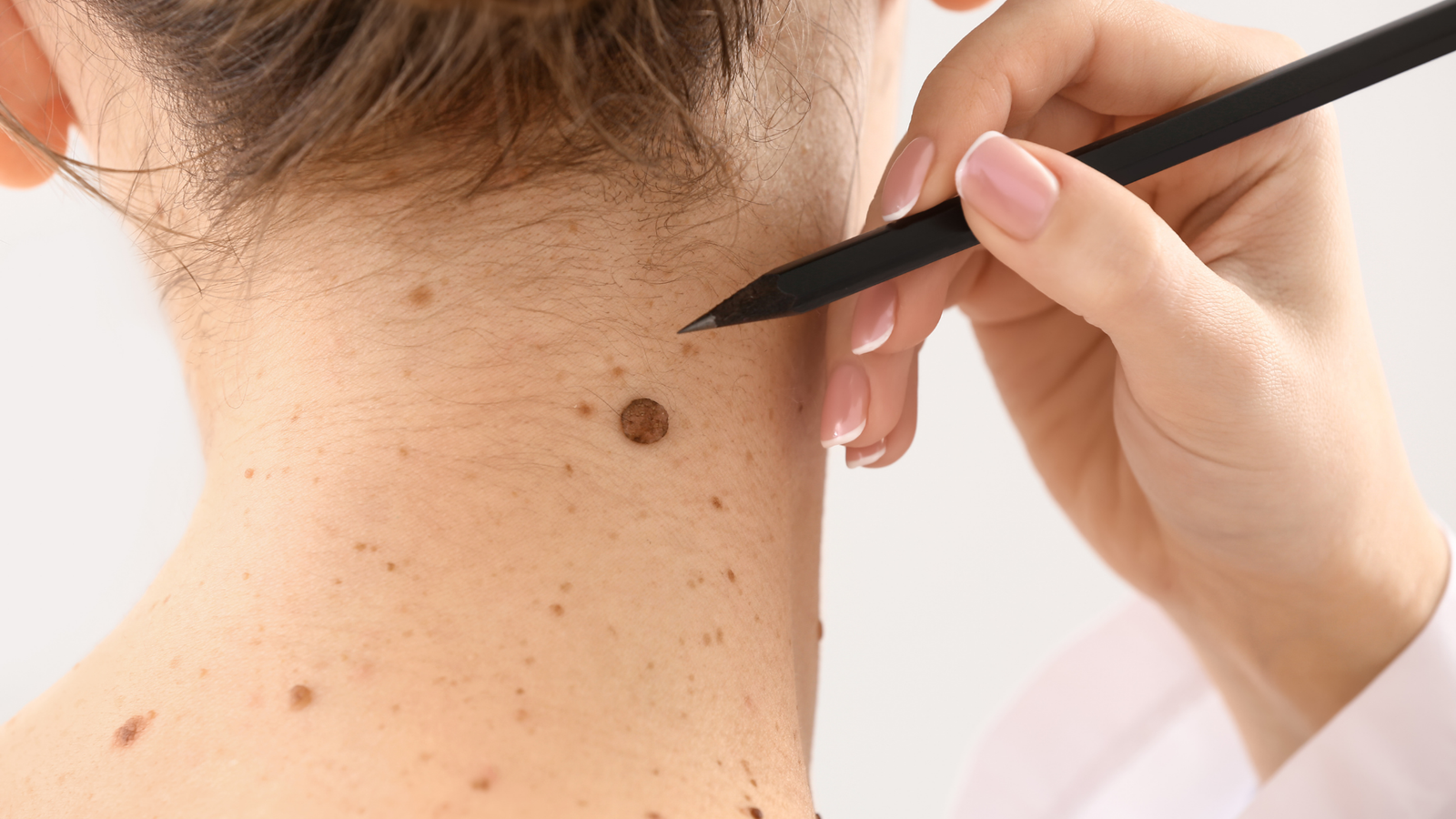
Most of us have a mole or two we would rather not have. Perhaps it sits right on the jawline and catches the razor every morning, or it has been on your cheek since childhood, and you have simply never liked it. Whatever the reason, deciding to do something about it usually raises the same questions: which treatment is right for my mole, will it leave a mark, and how do I know the clinic I choose is doing things properly?
This guide walks through the five mole removal methods most commonly used in UK clinics, explains what each one involves, and covers the safety checks and aftercare that make the difference between a good result and a disappointing one. By the end, you should feel confident asking the right questions at your consultation.
Why people choose to have a mole removed
Moles are extremely common. According to the National Cancer Institute, most adults have between 10 and 40 of them, and NHS dermatology guidance from Cardiff and Vale University Health Board puts the typical figure for young adults in the UK at 20 to 40. The vast majority are harmless clusters of pigment cells that appear in childhood and early adulthood and often fade later in life.
People generally seek treatment for one of three reasons. The first is cosmetic: a mole on the face, neck or décolletage that affects how someone feels about their appearance. The second is practical: raised moles that snag on clothing, jewellery or a razor and become sore or inflamed. The third is medical: a mole that has changed in size, shape or colour and needs to be assessed and, if necessary, removed for analysis.
That third category matters more than ever. Cancer Research UK reported that more than 20,000 people in the UK were diagnosed with melanoma in a single year, a record high, and that nearly nine in ten cases are linked to UV exposure from the sun and sunbeds. Any conversation about removing a mole for cosmetic reasons has to start with making sure it is a benign one.
Before anything else: get the mole checked
Cosmetic mole removal is not routinely available on the NHS. As several UK providers note, the NHS generally funds removal only where there is a medical reason, such as a suspected skin cancer, which is why many people look for private mole removal near me and end up at a dermatology or aesthetics clinic.
Before booking anywhere, look at the mole honestly against the ABCDE checklist that dermatologists use:
- Asymmetry – one half looks different from the other
- Border – edges are ragged, blurred or irregular
- Colour – more than one shade, or patches of black, red, white or blue
- Diameter – larger than about 6 mm, or noticeably growing
- Evolving – any change in size, shape, colour, height, or new itching, crusting or bleeding
If any of these apply, or the mole simply looks different from all your others, see your GP first. A suspicious mole should be examined and, where appropriate, referred through the urgent skin cancer pathway. It should never be treated with laser or plasma, because those methods destroy the tissue rather than preserving it for laboratory analysis. A responsible clinic will tell you the same thing at your consultation and will not proceed with cosmetic removal on a mole that has not been assessed.
With that in mind, here are the main treatment approaches.
1. Surgical excision
Surgical excision is the traditional method and remains the standard for any mole where there is even a small degree of uncertainty. Under local anaesthetic, the practitioner cuts out the whole mole along with a narrow margin of surrounding skin, then closes the wound with fine stitches. The removed tissue is sent for histology, which means a laboratory examines it under a microscope to confirm exactly what it was.
Best suited to: flat moles, larger moles, moles with any atypical features, and anyone who wants the reassurance of a laboratory report.
What to expect: the procedure usually takes 20 to 45 minutes. Stitches are removed after roughly one to two weeks depending on the site. You will be left with a fine, straight scar that fades over several months but never disappears entirely.
The trade-off: this method gives the lowest chance of the mole returning and is the only one that provides a definitive diagnosis, but it does leave a linear scar and involves a short period of wound care. It is performed by doctors and surgeons, typically in a dermatology or minor surgery setting.
2. Shave excision
Shave excision is designed for raised, benign moles. After numbing the area, the practitioner uses a fine blade to shave the mole level with the surrounding skin. There are no stitches. A small amount of cautery (heat) is sometimes used to seal the surface and stop any bleeding.
Best suited to: dome-shaped or protruding moles on the face, neck and body that have been confirmed as benign.
What to expect: the procedure is quick, often under 20 minutes, and heals like a graze over one to two weeks. The result is usually a flat, pale mark rather than a line scar, which many people prefer on the face.
The trade-off: because the pigment cells below the surface are not fully removed, some colour can return over time, and the mole can occasionally regrow. Tissue can still be sent for histology, although the sample is less complete than with a full excision.
3. Laser mole removal
Laser treatment targets the pigment within a flat, benign mole and breaks it down so the body can clear it. Several sessions are often needed, and the technology used varies between clinics: some use pigment-specific lasers, others use ablative lasers such as CO2 to remove the surface layers precisely.
Best suited to: small, flat, evenly coloured moles in cosmetically sensitive areas where avoiding a cut is a priority, and for people who scar easily.
What to expect: each session takes a matter of minutes. The area may be red, slightly swollen or lightly scabbed for a week or so. Results build gradually over two to three treatments.
The trade-off: laser does not provide a tissue sample, so it is only appropriate for moles that have already been assessed as harmless. Deeper pigment can be difficult to clear completely, and there is a chance the mole will lighten rather than vanish. Laser is also less predictable on deeper skin tones, where careful settings and a patch test are essential to avoid pigmentation changes.
Also read: CO2 Laser vs Microneedling: Which Is Better for Acne Scars?
4. Plasma removal
Plasma technology, sometimes called plasma pen or Plasma BT, uses a controlled electrical arc to vaporise the tissue of a small skin lesion layer by layer, a process known as sublimation. The device never touches the skin directly and affects only the treated spot, leaving the surrounding tissue untouched.
Best suited to: small raised benign moles, skin tags and similar lesions, particularly around the eyes, neck and face where precision matters.
What to expect: a numbing cream or small injection is applied first. Treatment of a single lesion takes around 10 to 30 minutes. Tiny carbon crusts form over the treated area and fall away naturally within about a week, revealing fresh pink skin underneath that settles over the following weeks.
The trade-off: as with laser, plasma removes tissue rather than preserving it, so it is reserved for lesions that are clearly benign. It is not the right choice for large or deeply pigmented moles, and the crusting phase requires a little patience and strict avoidance of picking.
5. Cryotherapy (freezing)
Cryotherapy uses liquid nitrogen to freeze and destroy a lesion. It is widely used in general practice for warts, skin tags and some sun-related growths, and is occasionally used on small, superficial benign moles.
Best suited to: small non-pigmented or lightly pigmented lesions where the practitioner is confident of the diagnosis.
What to expect: the freezing itself takes seconds and feels like a sharp sting. A blister may form, then a scab, which drops off within one to two weeks.
The trade-off: freezing depth is difficult to control precisely, so pigmented moles often need repeat treatment, and there is a higher chance of either leaving a pale mark or seeing the mole return. Most specialist clinics now favour shave, plasma or laser for moles and keep cryotherapy for skin tags and warts.
Comparing the five mole removal options at a glance
| Method | Ideal mole type | Tissue sample for analysis | Typical healing | Scar type |
| Surgical excision | Flat, large or atypical | Yes, complete | 1–2 weeks (stitches) | Fine linear scar |
| Shave excision | Raised, benign | Yes, partial | 1–2 weeks | Flat pale mark |
| Laser | Small, flat, benign | No | About 1 week per session | Minimal, may lighten rather than remove |
| Plasma | Small, raised, benign | No | About 1 week | Minimal, small pink mark that settles |
| Cryotherapy | Small, superficial, benign | No | 1–2 weeks | Possible pale mark |
Healing times are indicative. Individual responses vary depending on skin type, the site of the mole, and how closely aftercare is followed.
How to choose the right method
There is no single best technique, only the best technique for a particular mole on a particular person. When weighing up the mole removal options at your consultation, three questions will usually point you in the right direction.
Has the mole been assessed? If there is any doubt at all, surgical excision with histology is the sensible route, and a clinic should be willing to say so even if it means referring you elsewhere.
Is the mole flat or raised? Raised benign moles respond well to shave or plasma removal with very little scarring. Flat moles are more likely to need excision or a course of laser.
Where is it and how much does scarring matter to you? On the face, most people would rather accept a small pale mark from shave or plasma treatment than a linear scar. On the back or shoulder, a straight surgical scar that fades may be perfectly acceptable in exchange for certainty and a single visit.
A good practitioner will talk through all of this, explain the realistic outcome for your skin, and give you time to decide. Be cautious of anyone who promises scar-free or guaranteed results; no reputable clinic can offer either.
Safety considerations worth taking seriously
Mole removal is a minor procedure, but it is still a procedure on your skin, and a few precautions protect both your health and your result.
Choose a regulated setting. In England, clinics carrying out certain treatments are registered with the Care Quality Commission, and practitioners should be qualified medical professionals: nurses, doctors or surgeons with recognised training in skin lesion treatment. Ask who will be treating you and what their background is.
Insist on an assessment. Any clinic that offers to laser or plasma a mole without first examining it, asking about its history and checking your other moles is cutting a corner that could matter enormously.
Avoid home remedies and mole removal creams. Products sold online that claim to burn or dissolve moles can cause chemical burns, permanent scarring and, more worryingly, can remove the visible surface of a mole while leaving abnormal cells behind, delaying diagnosis.
Consider your skin tone. Heat-based treatments carry a higher risk of pigmentation changes on darker skin. An experienced practitioner will adjust the approach and may recommend a patch test.
Be honest about your medical history. Conditions affecting healing, blood-thinning medication, a tendency to keloid scarring and recent sun exposure all influence which method is appropriate and should be discussed before treatment.
Aftercare tips for the best possible result
The procedure itself is only half the story; how you look after the area in the following fortnight has a real bearing on the final appearance.
- Keep it clean and dry for the first 24 hours. Avoid soaking the area, swimming or heavy sweating.
- Do not pick. Scabs and crusts are protecting new skin underneath. Let them come away in their own time.
- Apply any prescribed ointment as directed. Some clinics recommend a thin layer of a healing balm; others prefer the area kept dry. Follow the instructions you were given rather than general advice.
- Protect it from the sun. New skin pigments very easily. Use a high-factor SPF on the area every day for at least three months, and keep it covered where you can.
- Hold off on make-up, exfoliants, and active skincare such as retinol or acids until the skin has fully closed, typically a week or more.
- Watch for signs of infection. Increasing redness, warmth, swelling, pus or pain that worsens rather than eases should be reported to your clinic promptly.
- Be patient. A treated area can look pink for several weeks and continue to improve for months. Judge the result at three to six months, not at three days.
What to expect at Manchester Aesthetics
Manchester Aesthetics Clinic is a nurse-led clinic in Moston, three miles from the city centre, offering assessment and treatment for benign skin lesions including small moles, skin tags and warts. Treatment options at the clinic include plasma technology and CO2 laser, selected according to the size, position and type of lesion. Every treatment begins with a consultation where the practitioner examines the lesion, discusses your history and explains the realistic outcome for your skin.
Moles that show any features of concern are not treated cosmetically at the clinic; you will be advised to see your GP for assessment first. That is not a barrier to care; it is the safest starting point, and it is how any reputable clinic should work.
If you would like to know which approach suits you, book a consultation online or call the clinic on 0161 222 3890. Consultations are relaxed, unhurried, and a chance to ask everything covered in this article, and plenty that is not.
