
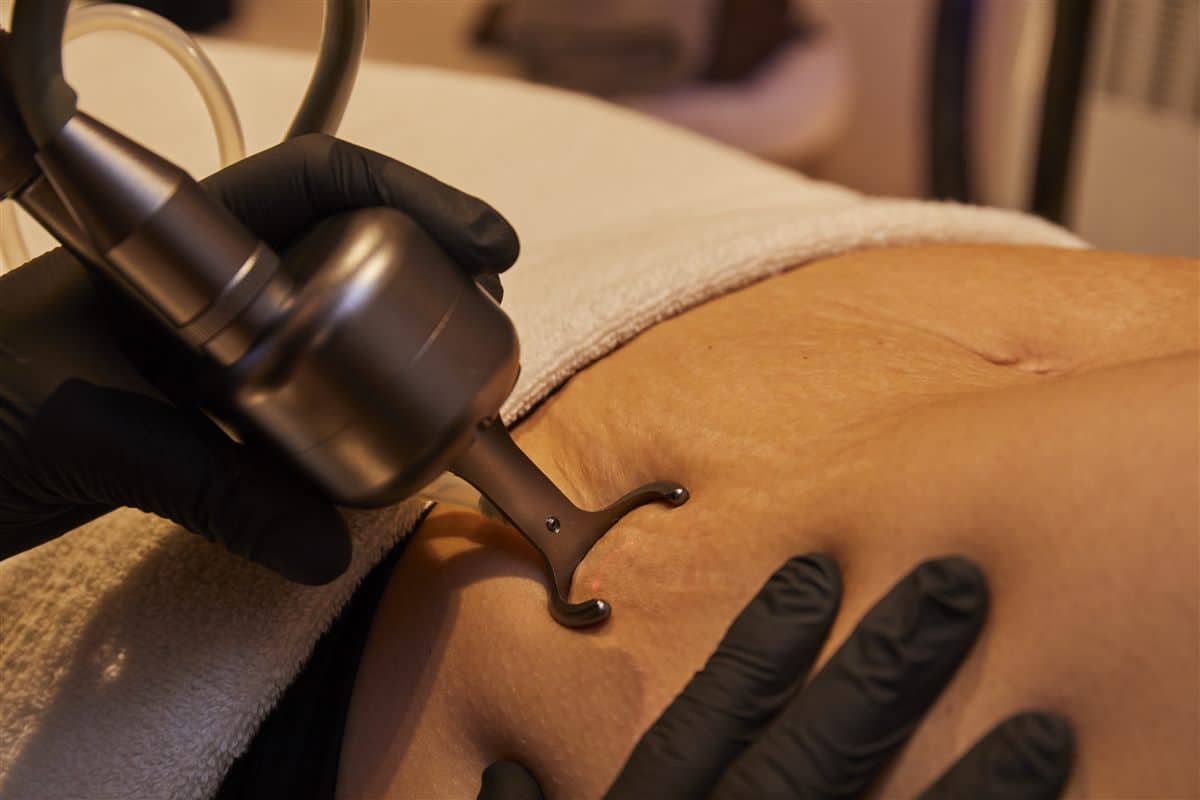
Quick answer: most people have about one week of visible CO2 laser downtime after treatment on the face. That’s when the skin is red, swollen and peeling. Most take that week off work or work from home. The skin usually settles fully in 2 to 4 weeks for the face and 4 to 6 weeks for body areas. Deeper treatments take longer.
CO2 laser is one of the most effective ways to improve skin texture, lines and scarring. It works by resurfacing the skin, so there is real downtime. Knowing what that downtime looks like makes it much easier to plan around work, family and social events. This guide explains how long CO2 laser downtime lasts and when you can go back to everyday life. It’s for anyone considering CO2 laser resurfacing in Manchester or elsewhere.
| Everyday activity | Typical timing after a full-face treatment |
|---|---|
| Most visible downtime | First 7 days |
| Back to work (face-to-face) | After about a week, or work from home in the meantime |
| Make-up | Once peeling has settled and your practitioner advises, usually after the first week |
| Hot, sweaty exercise, saunas, swimming | Avoid in the first week; your practitioner will tell you when to restart |
| Sun protection | SPF 30 or higher every day, from day one and throughout your course |
| Big event (wedding, party, photos) | Allow at least 4 weeks |
| Next session | 4 to 6 weeks later |
Timings vary with the depth of treatment, the area treated and your skin. Always follow the aftercare plan you’re given.
What does CO2 laser downtime actually mean?
Downtime is the time your skin looks visibly treated and needs extra care. With CO2 laser it helps to think of two stages:
- Social downtime is the first week or so. Your skin is red, warm and swollen, then flakes and peels. Most people prefer not to be seen in public, and many take time off work.
- Healing time is the longer period while the new skin settles. Pinkness slowly fades over 2 to 4 weeks on the face. You can get on with normal life, but the skin is more sensitive than usual, especially to sun.
Collagen keeps building for months after each session, which is why results improve gradually rather than all at once.
How long is CO2 laser downtime?
For most people the first week is the most visible part of recovery from CO2 laser:
- Days 1 to 2: redness, warmth and swelling, often described as feeling like sunburn.
- Days 2 to 5: the treated skin darkens slightly and sheds as fine, bronzed flakes. Let these come away on their own; don’t pick or scrub.
- Days 5 to 7: peeling settles and fresh, pink skin shows through.
- Weeks 2 to 4: pinkness fades and the skin settles.
That’s the short version. For a closer look at each stage, see the full day-by-day recovery timeline.
CO2 laser healing time depends on how deep the treatment is and where it’s done. Body areas heal more slowly than the face and usually take 4 to 6 weeks to settle.
Is fractional CO2 laser downtime shorter?
Fractional CO2 treats the skin in thousands of tiny columns and leaves healthy skin in between. That healthy skin helps the treated areas heal faster than older, fully ablative CO2 treatments. Fractional CO2 still has real downtime, though: most people plan for about a week of visible redness and peeling.
CO2 laser downtime by treatment area
Where you have treatment makes a real difference to how long CO2 laser downtime lasts. Skin on the face has a rich blood supply and plenty of oil glands, which help it repair quickly. Skin on other parts of the body is often thinner or has fewer of these structures, so it tends to heal more slowly.
- Face: most people have about a week of visible redness and peeling, then pinkness that fades over 2 to 4 weeks. This is the area most people treat and the one most people plan time off for.
- Neck and chest: the skin here is thinner and more delicate, so treatments are usually gentler and healing can take a little longer than on the face. A higher neckline or a light scarf helps while pinkness fades.
- Body areas (such as stretch marks or scars on the stomach, thighs or arms): these usually take 4 to 6 weeks to settle. Body areas are often easy to cover with clothes, so many people carry on with work and social plans much sooner than after facial treatment.
If you’re having more than one area treated, plan around the area that will take longest to settle.
How much time off work will I need?
Many people take about a week off work, or work from home, while the skin is red and peeling. How much time you need depends on your job:
- Working from home or behind the scenes: many people carry on with remote work after the first few days, once they feel comfortable. Camera-off video calls help.
- Face-to-face or client-facing roles: plan for a full week away, as redness and flaking are noticeable.
- Hot, dusty or physical jobs: heat, sweat and dirt can irritate healing skin, so you may need longer. Ask your practitioner.
A useful tip is to book treatment on a Thursday or Friday, so the most visible days fall partly over a weekend.
If you need to book annual leave, do it as soon as you have a treatment date. It’s also worth planning a few lighter days for your first week back, with fewer meetings, presentations or photos. Your skin may still look slightly pink, and you may feel more comfortable easing back in. Most people find that a little planning keeps CO2 laser downtime from clashing with work commitments.
Also read: CO2 Laser vs Microneedling: Which Is Better for Acne Scars? compares the downtime of both treatments side by side.
When can I wear make-up after CO2 laser?
Wait until the peeling has settled and your practitioner says the skin is ready. For most people that is after the first week. Wearing make-up too early can irritate healing skin and raise the risk of infection.
When you do start again:
- Use clean brushes or sponges.
- Choose gentle, fragrance-free products.
- Apply your SPF first.
- Take make-up off gently at night with a mild cleanser.
Light make-up is a good way to cover any leftover pinkness in weeks 2 to 4.
When can I exercise after CO2 laser?
Avoid anything that makes you hot and sweaty in the first week. That includes the gym, running, hot yoga, saunas, steam rooms and swimming pools, because heat and sweat can irritate healing skin and chlorine can sting. Gentle walking is usually fine. Your practitioner will tell you when you can return to your normal routine.
Why sun protection matters so much
New skin is very sensitive to UV light. Sun exposure during recovery can lead to pigment changes, especially in darker skin tones. After CO2 laser:
- Wear SPF 30 or higher every day, even when it’s cloudy or you’re indoors near windows.
- Wear a wide-brimmed hat outdoors and stay out of strong sun.
- Avoid sunbeds and fake tan until your skin has fully settled.
This is one reason many people choose autumn and winter for CO2 laser: there’s less sun, and it’s easier to keep treated skin covered. The NHS has more general advice on sunscreen and sun safety.
How to plan CO2 laser around events and holidays
- Weddings, parties and photos: allow at least 4 weeks between treatment and the event, so the pinkness has time to fade.
- Christmas and New Year: treat by late November if you’d like your skin settled for the festive season. Otherwise plan a January start, when diaries are quieter.
- Sunny holidays: don’t book a beach holiday soon after treatment. If you have one planned, mention it at your consultation so your sessions can be timed around it.
- A course of treatment: most people have around 3 sessions, 4 to 6 weeks apart, so plan the visible week of each session in advance.
Does downtime get easier with each session?
The CO2 laser downtime after each session in a course is usually similar, although it can vary if your practitioner adjusts the settings. Many people find later sessions easier to manage, because they know what to expect and already have a routine for the first week. After your first session, note when the peeling stopped and when you felt ready to go out, and use that to plan the next one.
What affects how long your downtime lasts?
- Depth and settings: deeper treatments give a stronger change but need longer to heal.
- Area treated: the face usually heals faster than the neck, chest or body.
- Your skin type and tone: darker skin tones can be treated with care, but carry a higher risk of temporary pigment changes. That’s why a patch test and more conservative settings are used.
- Aftercare: following your aftercare closely, keeping skin moisturised and protecting it from the sun all help it settle as expected.
Also read: Which Laser Treatment Is Best for Acne Scars and Pigmentation? explains how different lasers compare for scarring and uneven skin tone.
Who may need to wait before booking?
CO2 laser may not be suitable yet, or at all, if you:
- are pregnant or breastfeeding
- have active acne, a skin infection or a cold sore in the area
- have taken prescription acne tablets in the last six months
- have a fresh tan, or a sunny holiday planned soon after treatment.
If you’re considering CO2 for body concerns, read Is CO2 laser good for stretch marks? for what to expect on body areas.
How to prepare for an easier downtime week
- Clear your diary of face-to-face plans for the first week.
- Have your aftercare products, a gentle cleanser and a high-SPF sunscreen ready at home.
- Use a clean pillowcase and keep your hair off your face.
- Plan easy meals and light tasks so you can rest.
- Keep your practitioner’s contact details handy in case you have questions.
Looking after your skin during CO2 laser downtime
Good aftercare won’t make CO2 laser downtime disappear, but it helps your skin heal as expected and lowers the risk of problems. Your practitioner will give you a written aftercare plan, and that always comes first. In general:
- Cleanse gently. Use lukewarm water and a mild, fragrance-free cleanser, then pat the skin dry with a clean towel. Don’t rub.
- Keep the skin moisturised. Use the moisturiser or barrier product your practitioner recommends. Skin kept comfortably moist tends to feel less tight and flake more evenly.
- Let the skin peel naturally. Picking or scrubbing at flakes can leave marks and slow healing.
- Keep cool. A cool (not icy) compress wrapped in a clean cloth can ease warmth and swelling in the first couple of days.
- Sleep with your head slightly raised for the first few nights to help reduce swelling.
- Pause active skincare. Retinol, exfoliating acids, scrubs and strong anti-ageing products can sting and irritate new skin. Wait until your practitioner says you can restart them.
- Avoid fake tan, waxing and other treatments on the treated area until it has fully settled.
What’s normal during downtime, and when to contact the clinic
During the first week it’s normal to have:
- redness and a warm, sunburn-like feeling
- swelling, which is often worse in the mornings
- tightness, itching and dryness
- darker, bronzed flakes that shed over several days
- pinkness that slowly fades over the following weeks.
Contact your clinic straight away if you notice:
- pain that gets worse rather than better after the first couple of days
- redness or swelling that spreads, or skin that feels hot to the touch
- yellow crusting, oozing or an unpleasant smell
- blisters or small sores, which can be a sign of a cold sore flare-up
- a high temperature or feeling generally unwell.
These problems are uncommon, but it’s always better to check early. If you’re not sure whether something is normal, message the clinic with a photo and ask.
Is CO2 laser downtime worth it?
That depends on what you’d like to change and how much time you can set aside. CO2 laser works at a deeper level than lighter treatments, which is why it’s often considered for deeper lines, acne scarring and uneven texture. The trade-off is the downtime. Lighter options, such as chemical peels or microneedling, usually need only a few days of downtime, but they often take more sessions to make a noticeable change and may not suit deeper concerns.
There’s no single right answer. A good consultation helps you weigh the likely results against the downtime, look at your diary, and decide whether CO2 or a lighter treatment fits your life better right now.
Also read: Chemical Peels Manchester: Which Peel Is Right for Your Skin Type? if you’d like a lighter option with less downtime.
Plan your CO2 treatment with confidence
Every new CO2 client starts with a consultation and patch test. You meet Julie, our skin and laser specialist, who has more than 20 years’ experience and carries out our CO2 treatments. She assesses your skin, explains the downtime you can expect for your treatment and gives you a written plan and price. Your first session is at least 72 hours after the patch test.
Free consultation. £20 holding fee, redeemed against your treatment or refunded if you don’t go ahead. Appointments run until 8pm on weekdays, plus Saturdays, with free on-street parking.
Book a CO2 consultation and patch test
This article is general information and is not a substitute for personal medical advice. Your practitioner will give you aftercare and timings for your own treatment.
